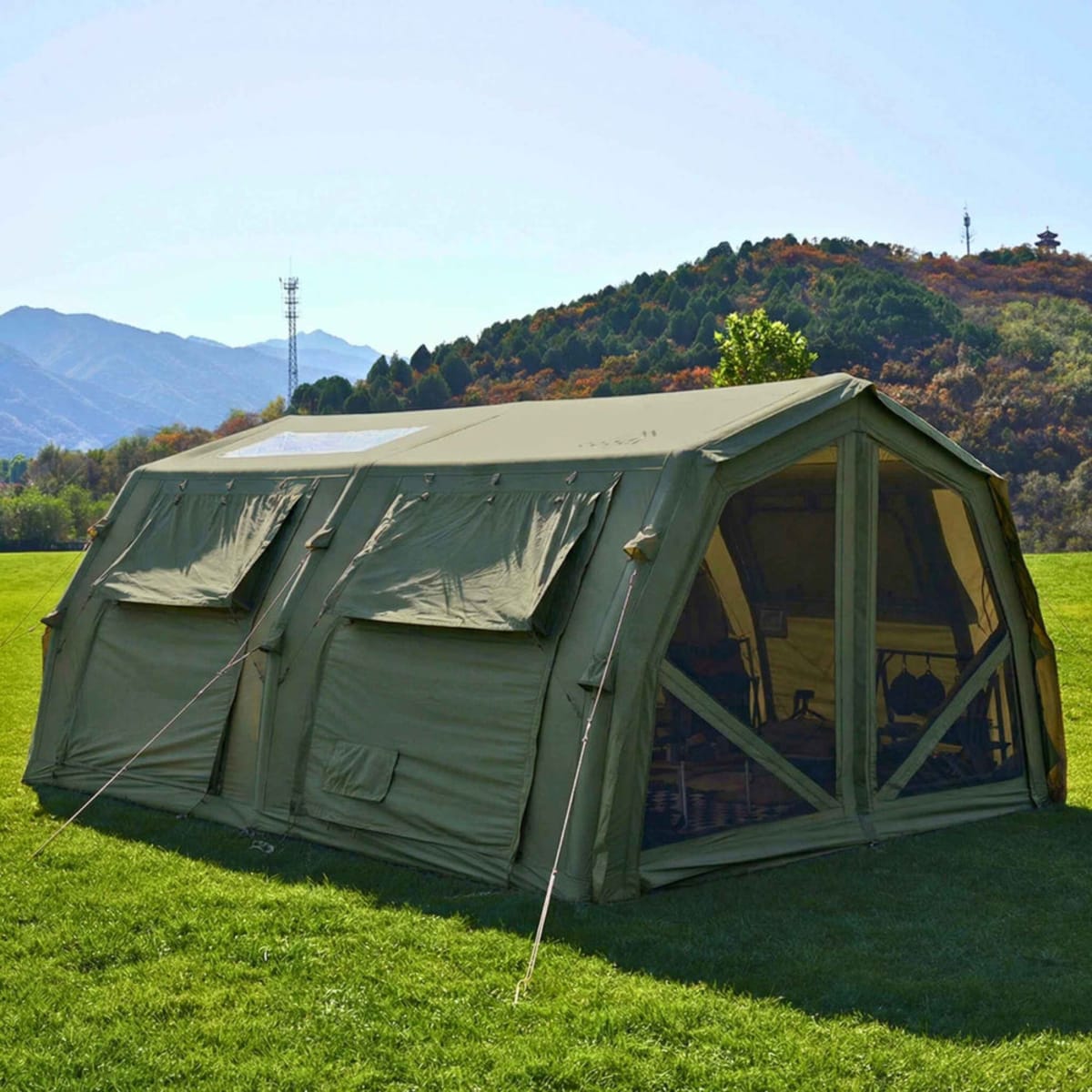
Inflatable Tent vs Traditional Tent for SA Camping — My Honest Take After 3 Years
## Three Years, Two Tent Types, Plenty of Opinions
I've been camping in South Africa for nearly twenty years — started with a basic dome from Makro, graduated to a canvas A-frame, then about three years ago switched to an inflatable when my brother-in-law pitched his Coody at our Kruger trip and had it up before I'd even found my pole bag. This is my honest comparison after using both seriously.
## The Traditional Tent Case
Don't write off traditional canvas and fibreglass-pole tents. They've been refined over decades and there's a reason plenty of serious overlanders still swear by them.
Advantages of traditional tents:
- Repairability in the field — a snapped fibreglass pole can be splinted with a branch, tent tape, and stubbornness. An inflatable tube failure requires a specific patch kit.
- Lower entry price — a solid dome or tunnel tent from Outdoor Warehouse or Cape Union Mart can be had for R3,000–R10,000. A quality inflatable starts around R22,000.
- Wider choice of shapes and sizes — especially at the budget end.
- Proven durability — older canvas designs like the Hilleberg-style ridge tents are virtually indestructible.
## The Inflatable Tent Case
After three years with my Coody (I've used the Coody 8 for couple trips and borrowed a friend's Familia for family outings), here's what converts me:
Advantages of inflatable tents:
- Setup speed — cannot overstate how much this matters rolling into a Kruger rest camp in last light. No poles means no wrestling in the dark.
- Wind performance — the inflatable frame flexes and absorbs gusts. That south-easter at Paternoster nearly took my neighbours' tent. My Coody was perfectly calm.
- No pole failures — fibreglass shatters, aluminium bends. Inflatable tubes simply don't fail the same way.
- Breathability — the TC cotton-blend canvas on the Coody produces noticeably less condensation and a cooler interior.
- Interior feel — inflatable tubes give more usable headroom at the walls.
## Real Conditions Tested
- Kruger, October heat — the Coody's canvas kept things about 4°C cooler than an equivalent nylon dome in direct afternoon sun.
- Drakensberg, April cold — no condensation issues down to about 3°C overnight with a good sleeping bag.
- Cape weekend, south-easter — see above. The wind test is where inflatables really shine.
- Waterberg, rainy season — the seam sealing on the Coody is excellent. No leaks after heavy overnight rain.
## The Verdict
For family camping and weekend overlanding where the bakkie carries your kit, an inflatable like the Coody wins on setup convenience, comfort, and wind resistance. The R22,000–R39,000 investment (available at [airtents.co.za](https://www.airtents.co.za)) pays off quickly if you camp more than five weekends a year — the time saved alone is worth it.
For backpacking, budget camping, or situations where repairability matters more than convenience, a quality traditional tent still makes sense. The two types serve different needs, and there's no shame in owning both.
6 Replies
This is the most balanced comparison I've seen on BushCamp — well done. My take after two years with a Coody 8 on mostly Waterberg and Limpopo trips: the wind performance point is completely accurate. I've pitched at places with exposed hilltop sites that would have destroyed a dome tent and the Coody just sat there looking totally unbothered. The TC canvas breathability is also real and not marketing fluff — our old dome was dripping with condensation every morning in the Lowveld heat. That problem is completely gone with the Coody. I'd never go back to a traditional dome.
I still run a traditional canvas ridge tent for my solo Cederberg hiking trips — weight and packability matter too much there and nothing beats a well-made lightweight tent for those conditions. But for the car-camping family trips to Langebaan or Gansbaai where we drive in fully loaded, the Coody we rented for a trial weekend was a genuine game-changer. Two kids were inside playing and unpacking sleeping bags before I'd even sorted out where to put the cooler box. That alone sold us on it. We're saving up for the Coody 13.6 through airtents.co.za — should have it by the July holidays.
The repairability point is fair but I'd push back slightly — the Coody repair kit is actually pretty comprehensive and a small puncture in the field takes about ten minutes to fix once you've practised the process at home first. I carry a spare patch kit as backup and have never had an actual failure in three Drak trips and several other outings. The bigger risk in my experience is actually the zip rather than the tubes — give it a light application of beeswax or zip wax every season and keep it clean, and you'll be fine. The tubes themselves are really robust.
Traditional canvas for winter cold, inflatable for everything else — that's basically where I've landed after trying both seriously over several years. My old dome tent leaked badly on the third night of a Richtersveld trip and that was genuinely the last straw. The Coody we eventually bought from airtents.co.za hasn't let us down once across two Limpopo trips and a long weekend in the Tankwa. Different tools for different jobs, as you say — no shame in keeping both types in the garage for different adventures.
Jislaaik, I showed this post to my camping group and we had a proper debate on the stoep that lasted most of a Saturday afternoon. End result: three of the five of us are now seriously looking at Coody tents. The Friday afternoon setup point hit hard — we always end up arriving late at camp and setting up in the dark after a long bakkie drive from Joburg is genuinely miserable. One of the guys is ordering the Coody 13.6 from airtents.co.za next week. Thanks for putting this together — it's exactly the kind of real-world, no-nonsense comparison this forum needs more of.