Best Solar Panels for Overlanding in SA — Rigid vs Flexible vs Folding
## Powering Your SA Overland Rig in 2025
Solar power for overlanding has gone from a luxury to near-essential in South Africa — excellent irradiance across most regions, and loadshedding has made SA overlanders very comfortable with off-grid setups. A decent 120W–200W panel system will power a 40L fridge, LED lighting, and device charging across multi-day trips in most SA conditions.
## Rigid Panels — Best Value Per Watt
Rigid monocrystalline panels offer the best efficiency and longest lifespan:
- Victron 175W BlueSolar — around R3,500–R4,500 from SA dealers. The gold standard for serious overlanders and integrates seamlessly with Victron's SmartSolar MPPT ecosystem.
- JA Solar / Canadian Solar 200W — sourced via electrical wholesalers for R1,500–R2,500. Same quality tier used in residential solar, very reliable.
- Renogy 200W Rigid — popular in SA overlanding circles at approximately R2,000–R3,000.
Pros: best efficiency, 25-year lifespan, hail-resistant, lowest cost per watt long-term
Cons: heavy, requires roof rack mounting, adds height
## Flexible Panels — Think Carefully
Flexible ETFE panels (R1,200–R3,500 for 100–200W) adhere to roof surfaces and suit camper vans. Important caveat for SA: flexible panels run significantly hotter without an air gap beneath them. A 200W flexible panel may deliver only 140–160W in peak SA summer when surface temps hit 60°C+, and lifespan is 5–10 years vs 25+ for rigid. Best reserved for purpose-built trailers, not bakkie roof racks.
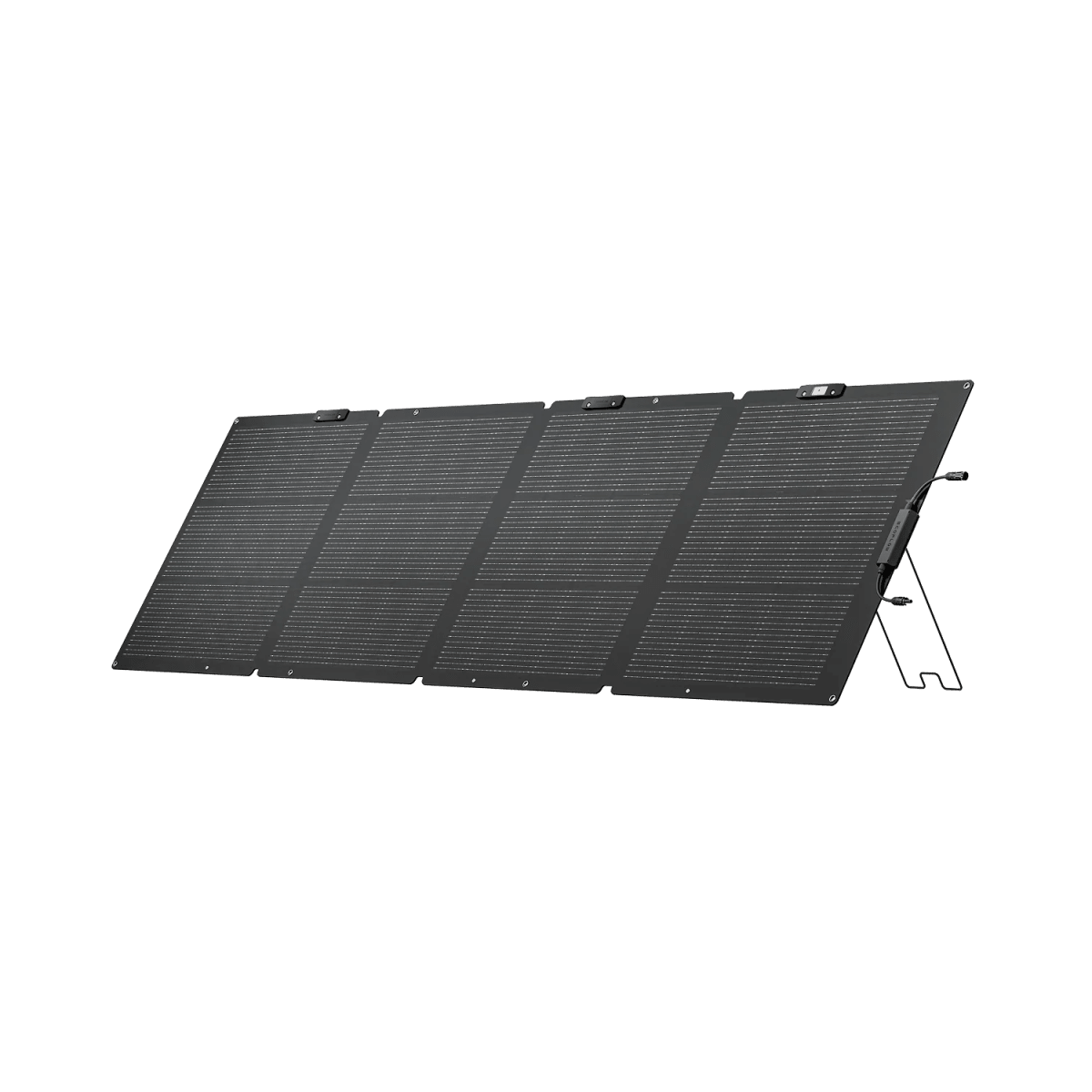
## Folding Panels — The Versatile Option
- Renogy 200W Foldable Suitcase — R3,500–R5,000, monocrystalline cells, built-in kickstand
- Goal Zero Boulder — R5,000–R10,000, premium build, excellent durability
- Generic Takealot options — R800–R2,000 for 100W, quality varies, buy carefully
Pros: portable, angle-adjustable for maximum output, independent of vehicle position
Cons: must be deployed and retrieved manually, no power generation while driving
## The MPPT Controller
Pair any panel with a quality MPPT. Victron SmartSolar (R1,500–R4,000) is the SA overlanding standard. The VictronConnect Bluetooth app is genuinely useful for monitoring live charge data at camp.
## Recommended Setups
| Budget | Setup |
|---|---|
| ~R5,000 | 200W JA Solar rigid + generic MPPT |
| ~R10,000 | 200W Renogy folding + Victron SmartSolar 20A |
| ~R18,000+ | 300W Victron rigid + Victron 40A MPPT + 100Ah LiFePO4 |
Bottom line: 200W rigid on the roof rack + Victron SmartSolar is the most reliable bakkie setup. Add a folding panel for cloudy-day top-up on extended trips.
6 Replies
The Victron ecosystem point is completely spot on. Once you're properly in it — panel, MPPT controller, BMV battery monitor, all talking to each other over Bluetooth — you genuinely will never go back to guessing your battery state. I can check my SOC and live charge rate from inside the tent at 2am when I hear the fridge compressor cycling more frequently than usual. Ja nee, maybe that's slightly obsessive behaviour, but on a ten-day Namibia trip where power management actually matters for your fridge full of food, it's completely invaluable. The Victron SmartSolar 75/15 is where I'd tell any bakkie overlander to start.
I ran a flexible panel on my Land Cruiser roof for two full years and eventually replaced it with a rigid panel and I'm glad I did. The flexible panel's output degraded noticeably after the first full SA summer — by year two I was measuring maybe 65% of the rated wattage in real conditions. Partly the heat and partly some micro-cracking in the cells that you simply cannot see from the outside. The rigid 175W Victron BlueSolar that replaced it has been completely rock solid for three years now and is still hitting spec on every trip. The extra height on the roof profile is a fair trade for 25 years of reliable performance.
For solo weekend trips on a budget: the Renogy 100W folding suitcase panel from a SA importer for about R1,800 plus a cheap PWM controller gets you going. Not optimal but it'll charge your leisure battery and run a small fridge. Once you're hooked on solar camping you'll upgrade, but it's a low-cost way to start. Just don't leave the panel in direct sun for too long — the integrated controller in cheap folding panels doesn't always handle sustained SA summer temps well.
Quick but important tip on wiring that nobody talks about enough: size your cable properly from the start. Most overlanding solar problems I've investigated — and I've helped a few mates troubleshoot on trips — are caused by undersized cable runs either between panel and MPPT or between MPPT and the battery. Use the Victron cable sizing tool online before you buy wire — it's free, takes about three minutes, and tells you exactly what cross-section you need for your run length and current. A 4mm² cable run that should be 6mm² will silently cost you 10–15% efficiency and generate unwanted heat. Not what you want inside a hot bakkie cab on the N1 in December heading north.
For Cape winter camping in particular the folding panel makes more practical sense than a fixed roof panel in my experience — you can angle it deliberately to track the lower winter sun arc and actually get decent output even on a partly grey day when a flat roof panel would be underperforming significantly. I have a 200W folding panel that I set out perpendicular to the sun every morning and park the Prado in shade while it charges. Works beautifully for multi-day Cederberg trips where you genuinely cannot count on full overhead sun hitting a fixed roof-mounted panel. The flexibility is worth the minor inconvenience of setting it out.